
Eye-tracking system for assessment of suicide risk
Mr Fakia and Ms Ogris aim to assess whether significant differences in eye parameters of people can be detected using self-made eye-tracking system. Check out their video.
Read more

Mr Fakia and Ms Ogris aim to assess whether significant differences in eye parameters of people can be detected using self-made eye-tracking system. Check out their video.
Read more
The bachelor project of Ms Müller exploits the use of machine learning for real-time classification of two imaginary hand movements recorder with EEG, setting the basis for brain-computer interface.
Read more
The story of our alumna Birgit Wüstenhagen spans across continents, cultures, and oceans. Her journey started at the CUAS and took her from Austria via Ireland to New Zealand.
Read more
DataCamp is one of our eLearning tools we use to teach our students the basics of programming. Especially in the lectures dealing with data analytics and deep learning, Verena Venek is using the provided Python courses, practices and guided projects to address the various programming skills and support learning.
Read more
We are starting with a new HyFlex master’s program in Medical Engineering & Analytics and with the doc.funds project establishing 7 PhD positions in collaboration with the Medical University of Vienna.
Read more
At the end of “Medizinische Gerätekunde” course, the 2nd-semester bachelor students visited the Klinikum Klagenfurt and were guided through the shock room, the intensive care, the dialysis, and the surgery units, to see how are the devices they learned about applied in clinics.
Read more
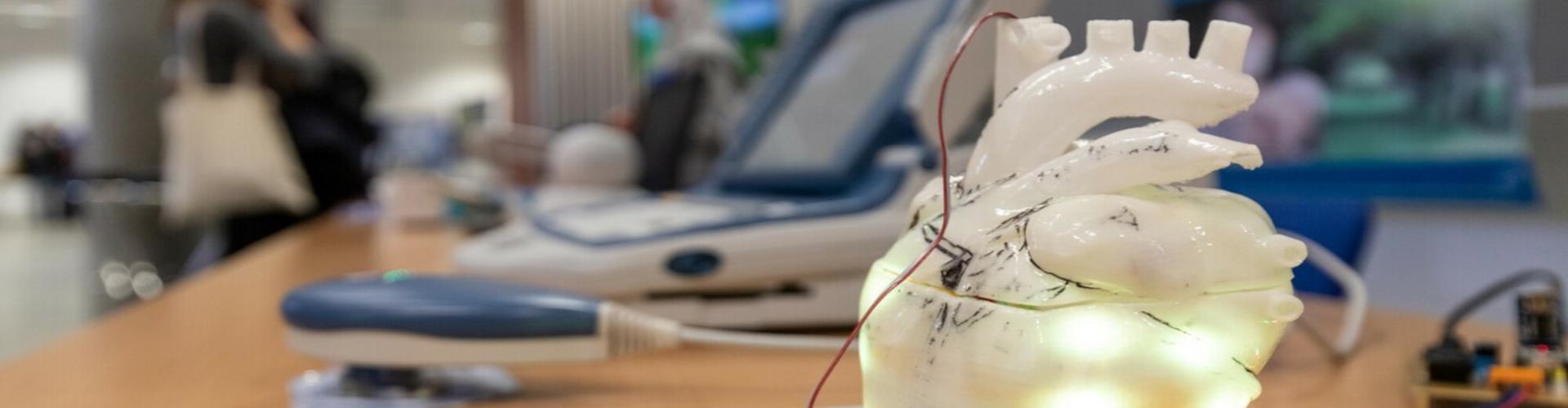
Last week, 26 pupils took part in the CUAS TECH Camp 2023 and worked on cool technical projects in which they got a taste of topics from various fields. In Team Heart, we were constructing an enlightened 3D-printed model of a human heart.
Read more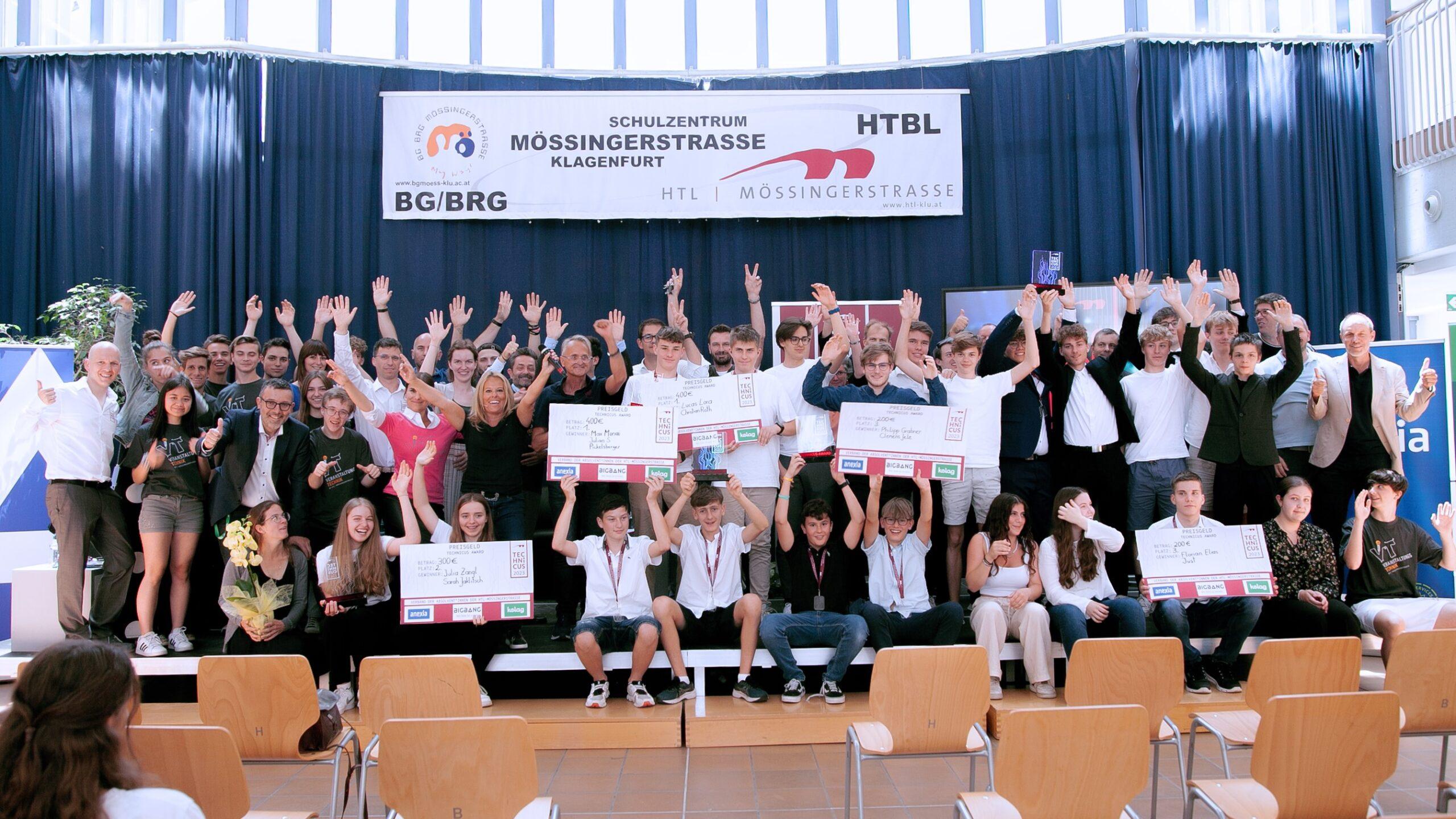
Three projects of the Mössingerstraße cooperative class pupils were awarded the Technicus Award 2023 which aims to honour particularly committed pupils working on innovations and future-oriented projects.
Read more
Our 4th-semester bachelor students visited the KABEG Klinikum Klagenfurt to look at the medical imaging devices they had learned about this semester. ” Seeing the equipment that is taught about in theory in practice gives the whole thing more reality and practical relevance.”
Read more
The CUAS and its IARA research centre participated in the Erasmus+ Blended Intensive Programme “Digital Competences” which gathered students and teachers from four European countries to study the opportunities and obstacles digitalization creates for different target groups.
Read more
Visiting conferences represents an important part of a scientific career. International Student Congress is Austria’s largest health congress for students. Three contributions of our students were accepted and will be presented at the ISC 2023.
Read more
With the ArtUs ultrasound device, we will be able to demonstrate the basic principles of ultrasound imaging and to teach about the technical details of ultrasound imaging, its image reconstruction and postprocessing.
Read more
As part of the collaboration project with Med Uni Wien, seven PhD positions will be established, starting in the winter semester 2023/24. The goal of this project is to bridge the gap between brain research and clinical needs with cutting-edge magnetic resonance imaging (MRI) and machine learning.
Read more
In this post, we interviewed one of our alumni, Philipp Bürger, and asked him about his studies at the CUAS and his following career. Philipp graduated in 2014 and currently works at Canon Medical Systems.
Read more
Bachelor projects give students the first chance to explore their interests and focus on a given topic. Just before the semester break, we presented to our students a wide range of innovative topics, including AI detection of stenosis, development of brain-computer interface, fall detection, production of MRI and ultrasound phantoms and development of eHealth applications, and we are looking forward to working on them together.
Read more
I am Almira Ada Diken Türksayar and
I am an assistant professor in prosthodontist at Biruni University, Turkey. I came here for a research stay focused on assessing the quality of 3D printed dental abutments. At the CUAS, I got the chance to use the unique Orion Medical 3D PEEK printer and produced several abutments, which I will test for mechanical properties back in Turkey.

As a part of the Health Care & IT master’s studies, all students have the opportunity to select a project to work on for the next two years. We, Anna and Laura, have decided to work on the “LEXO project”.
LEXO is an end-effector robotic gait trainer used for rehabilitation of the lower extremities.

With the focus on the current trends in medical engineering – artificial intelligence, augmented and virtual reality and assistive technologies –
it is designed to educate a new generation of biomedical engineers, who will innovate our health care.

In December 2022, CUAS graduate and current staff member Ms Venek obtained her doctorate from the University of Salzburg. In her dissertation in the field of sport and exercise science, she investigated the use and effect of sensor technologies in the assessment of movement quality.
Read more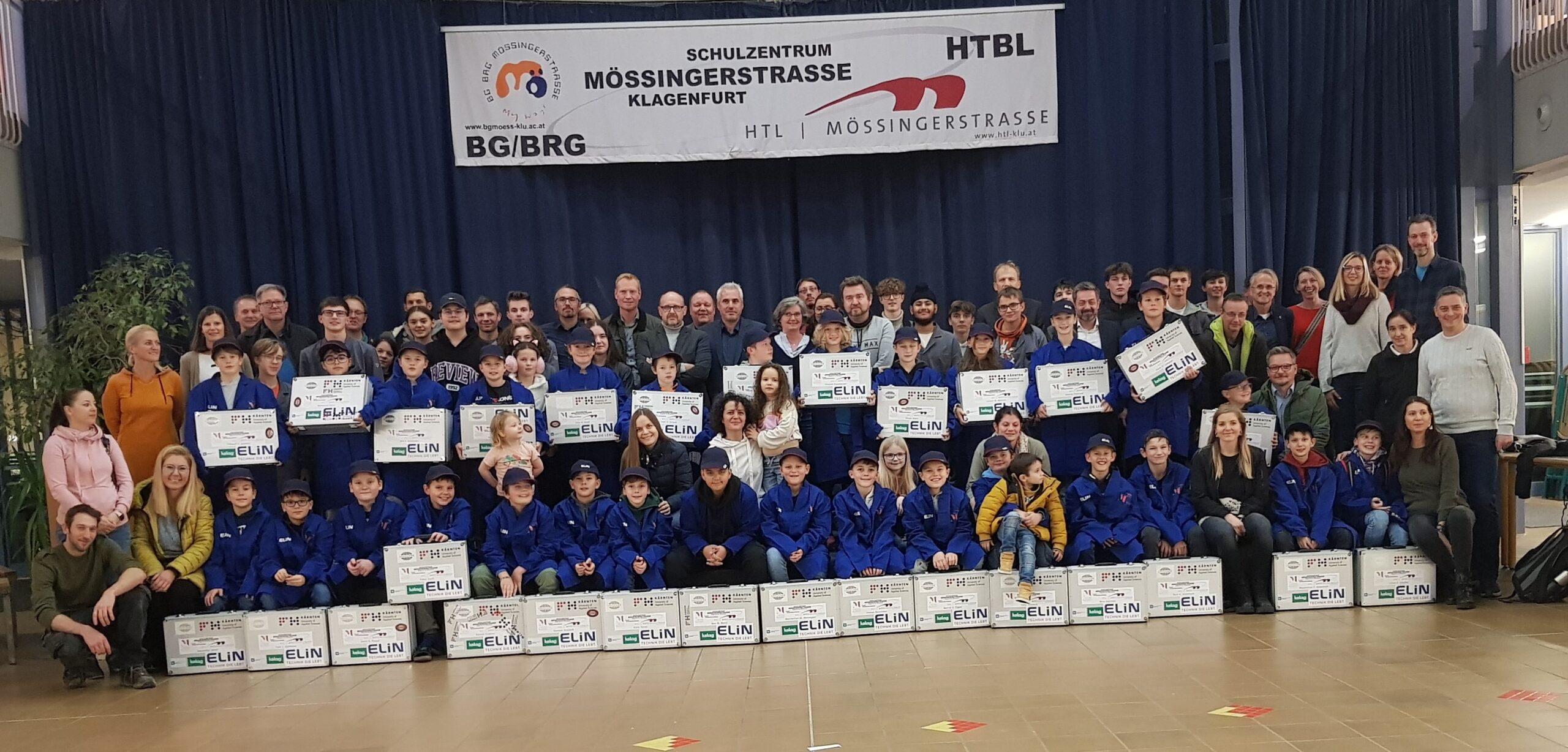
The CUAS supports the education of young talented pupils and students, hoping that they will discover their passion for science. As such, the CUAS sponsors the cooperative class, which is a cooperation between the Mössinger grammar school and the higher technical education institute (HTL).
Read more