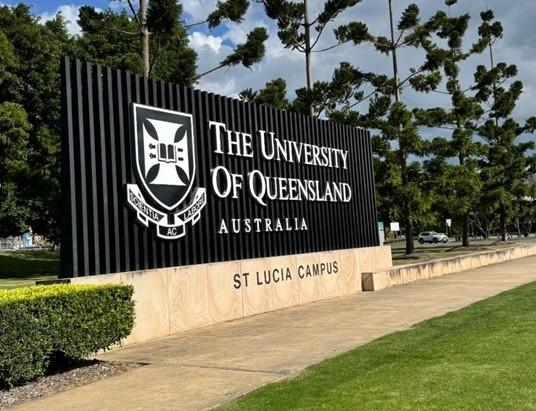
As part of my Master’s thesis in Medical Engineering & Analytics at FH Kärnten, I had the opportunity to conduct part of my research at The University of Queensland (UQ) in Brisbane, Australia, supported through the Erasmus+ programme. This international research stay allowed me to further develop my work on reproducible Quantitative Susceptibility Mapping (QSM) pipelines within a highly collaborative research environment.
Research Focus: Reproducibility in Quantitative Susceptibility Mapping
Quantitative Susceptibility Mapping (QSM) is an advanced MRI-based technique used to quantify magnetic susceptibility in biological tissue. It plays an important role in the investigation of neurological disorders, particularly in studying iron accumulation in deep gray matter structures. Despite its growing clinical relevance, QSM research faces a major methodological challenge: reproducibility. Differences in preprocessing strategies, algorithm implementations, software dependencies, and computing environments often limit the comparability of results across studies.
My Master’s thesis, titled “Enhancing QSM Reproducibility: A FAIR Analysis of Research Papers and NeuroDesk-Based Implementation,” addresses this issue directly. The central objective of my work is the integration and containerized execution of multiple QSM algorithms within the QSM-CI framework. By leveraging container technologies such as Docker and Apptainer, each algorithm operates within an isolated and version-controlled environment. This ensures consistent execution across systems and reduces variability caused by dependency conflicts or local configurations.
Implementation within QSM-CI and NeuroDesk
During my stay at UQ, I focused on extending and refining the QSM-CI pipeline. The implementation included:
- Integration of legacy and modern QSM algorithms
- Standardized BIDS-based input handling
- Automated container-based execution
- Structured output generation for systematic evaluation
This container-centric approach contributes to improved comparability of QSM results and supports the long-term goal of transparent, reproducible medical imaging research aligned with FAIR principles.
Erasmus+ & international exchange

Beyond the technical work, the Erasmus+ research stay was also a valuable international experience. I worked in a very welcoming and professional team, and this made my stay much better. Living and working in Australia allowed me to experience a different academic culture. I met inspiring and open-minded people from all over the world — researchers, students, and professionals. Many of these connections will last well beyond my research stay, and I am grateful to have made friendships that I will carry with me into the future.
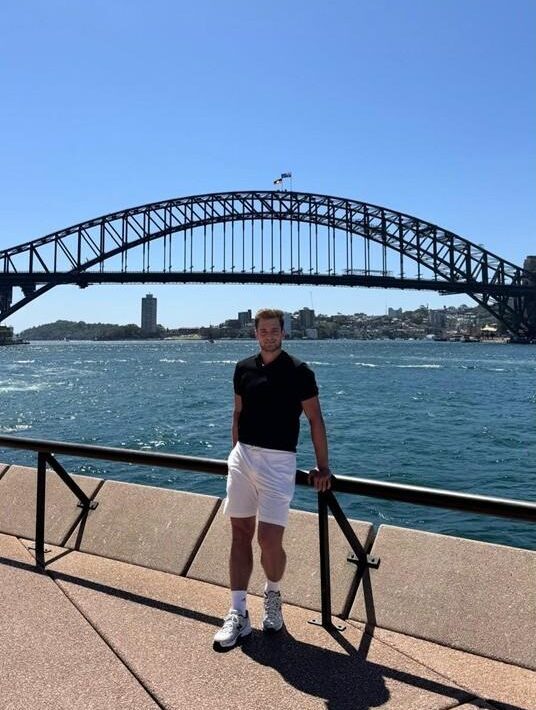
Outside the university, Australia’s landscapes and coastline made a strong impression on me. I explored different parts of the country, visited vibrant cities, and spent time at its beautiful beaches. From Sydney and Perth to Brisbane, the Gold Coast, and Cairns, each place offered a unique experience. The openness of the people and the international atmosphere further highlighted the importance of global collaboration. I will for sure come back to Australia one day!

Yours,
MedTech @ FH Kärnten Team